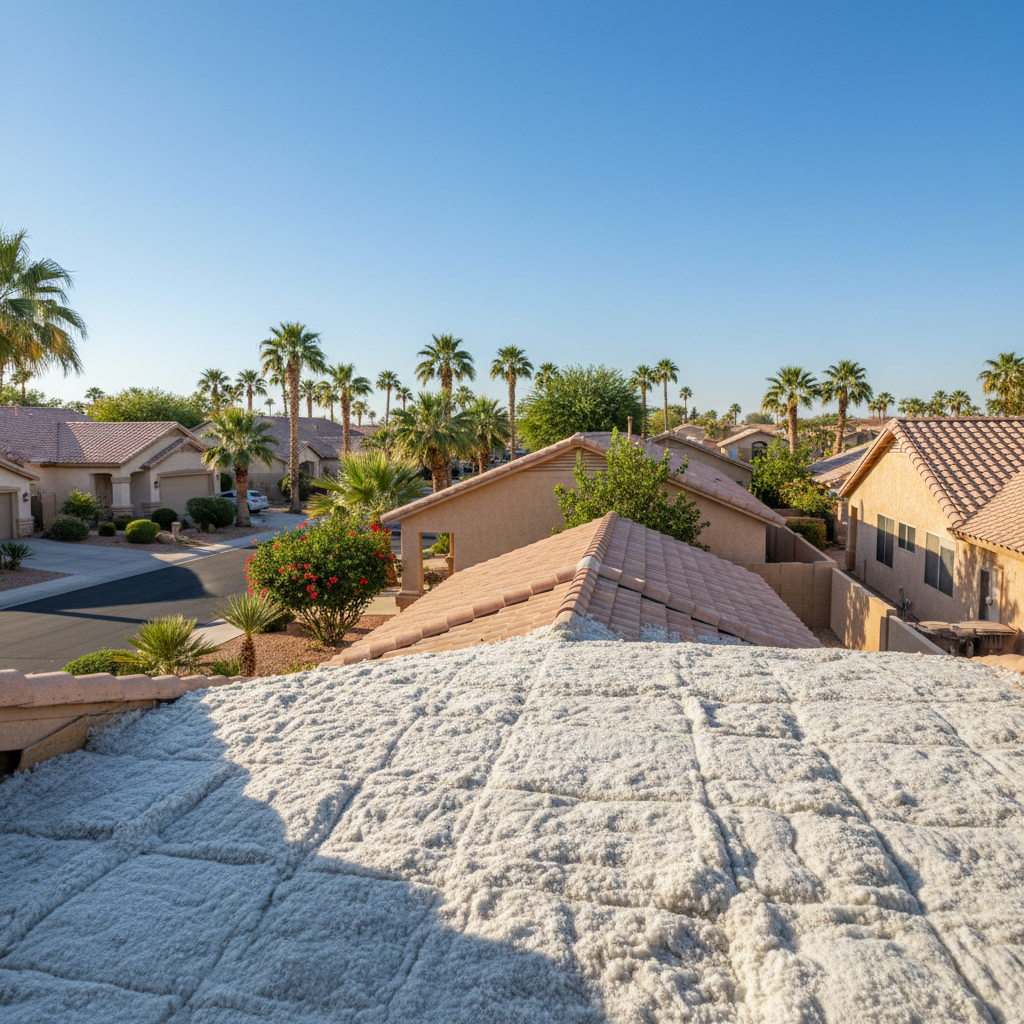
Ever walk into your house over in Arrowhead Ranch or down near Historic Downtown Glendale in July and feel like you just stepped into an oven? That heat is not just coming through your windows. It is radiating right down from your attic, where temperatures up here in the desert regularly blast past 140 degrees.
Glendale Spray Foam Insulation has climbed into hundreds of attics across the West Valley over the years. What we usually find is builder-grade fiberglass batts that have flattened out, settled, or completely broken down after taking 15 to 20 years or more of brutal Arizona heat. When your insulation is compressed, it stops trapping air. And when it stops trapping air, your air conditioning unit has to work overtime 24 hours a day just to keep your living room at 78 degrees.
The Real Cost of Poor Attic Protection
Most homeowners do not think about their attic until their electric bill hits 400 or 500 dollars in August. By then, you have already thrown a large amount of cash right out your roof vents. Glendale's climate is harsh on building materials. The extreme thermal cycling makes cheap materials break down fast. If you have got ductwork running through your attic, which almost every home around Glendale Regional Park or Yucca does, that hot air is heating up your ducts before the cold air even reaches your vents. You are cooling your attic space instead of your kitchen.
Upgrading your attic setup changes things quickly. Glendale Spray Foam Insulation usually looks at air sealing first. If you do not seal up the tiny gaps around your light fixtures, top plates, and plumbing penetrations, new insulation will not fix your draft problems. Hot air sneaks right through those cracks. Once that is locked down, adding the right depth of material makes a large difference.
Choosing What Goes Up There
Homeowners have options when it comes time to upgrade. Some homeowners prefer blowing in extra cellulose over what is already there to boost the R-value up to R-49 or R-60. Others want a complete overhaul with closed-cell spray foam right against the roof deck to create an unvented conditioned attic. Glendale Spray Foam Insulation takes a look at your specific framing, your current HVAC setup, and what you are trying to spend before recommending one over the other.
Houses in newer subdivisions near Loop 303 are built differently than those mid-century ranch homes over by Glendale Avenue. Local experience matters because we know what these different builders cut corners on. We know how the roof trusses shift in this dry heat and where the air leaks hide.
If your air conditioner is running constantly and your bedrooms upstairs are always ten degrees hotter than the rest of the house, take a flashlight and peek up through your attic hatch. If you can see the top of your ceiling joists clearly, you are losing money every single day. Give Glendale Spray Foam Insulation a call and let us get that heat out of your overhead space for good.