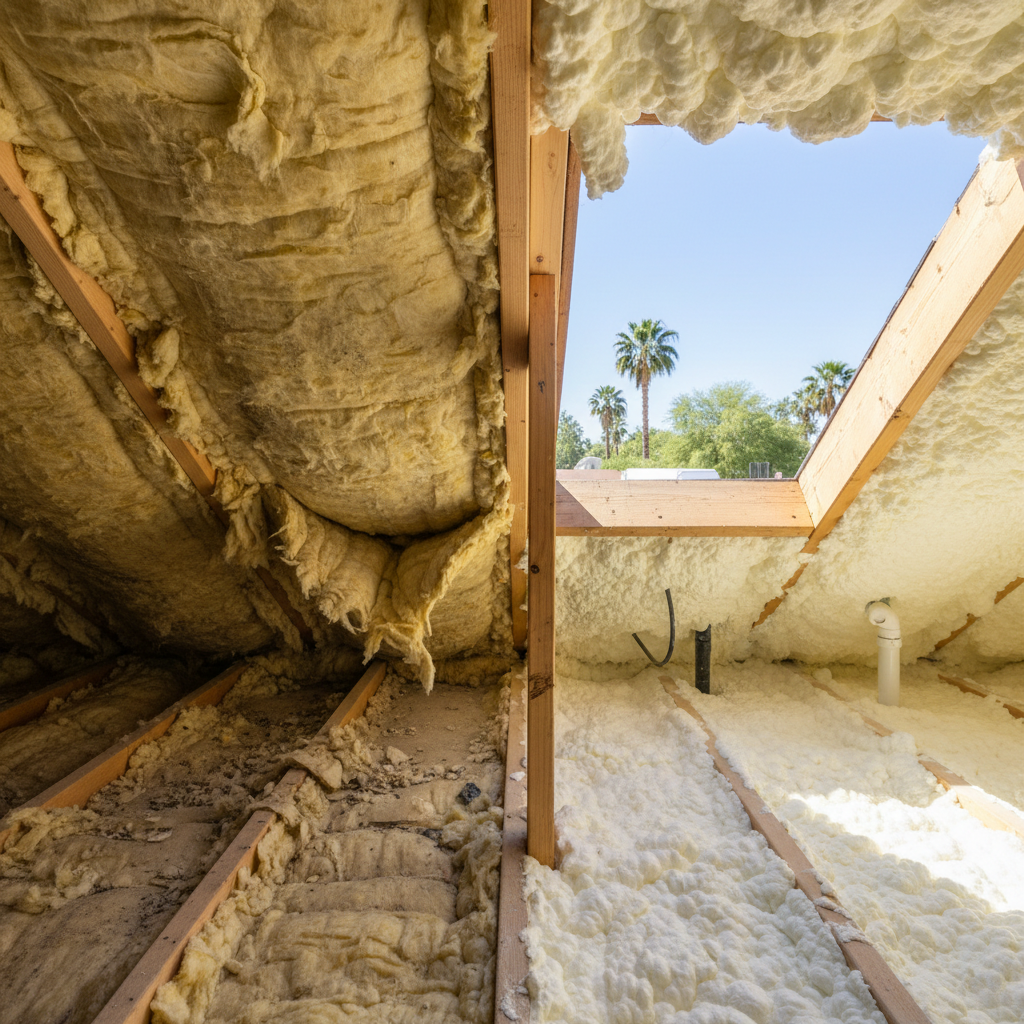
Alright, let's talk open cell spray foam. You've probably heard it's fantastic for keeping your Glendale home cool and, even better, for slashing those AC bills. And you'd be right! But once you start digging into it, you'll find there are a couple of ways folks put this stuff in: flash and batt, or full fill. It's not just about spraying foam; it's really about how much and where. So, what's the actual difference, and which one should you be thinking about?
Flash and Batt: The Hybrid Approach
Flash and batt is pretty much what it sounds like. We're talking a thin layer—usually an inch or two—of open cell spray foam that goes right onto the sheathing or inside the wall cavity. After that foam sets up, traditional batt insulation, like fiberglass or mineral wool, gets installed right on top, filling up the rest of the space. It’s a hybrid system, really, trying to snag the best parts of both worlds.
The big idea here is that the spray foam creates a super tight seal, stopping air leaks cold. That's a huge deal in Glendale, where every tiny crack just invites hot, dusty air inside. Then, the batt insulation adds the bulk R-value, boosting your thermal resistance. People often pitch this as a more budget-friendly way to get some of the spray foam benefits without paying for a full-on foam job.
Full Fill: Going All In
Then there's full fill. This is where we completely pack the entire wall or ceiling cavity with open cell spray foam. No batts, no other insulation types. Just foam, from one side of the cavity to the other. It expands to fill every single nook and cranny, creating one big, airtight, and well-insulated barrier.
With full fill, you're getting the absolute maximum air sealing and the highest possible R-value for that specific cavity. Done right, there are no gaps, no voids, and no thermal bridging through the framing. It's a really comprehensive solution, and honestly, it’s what most people picture when they hear