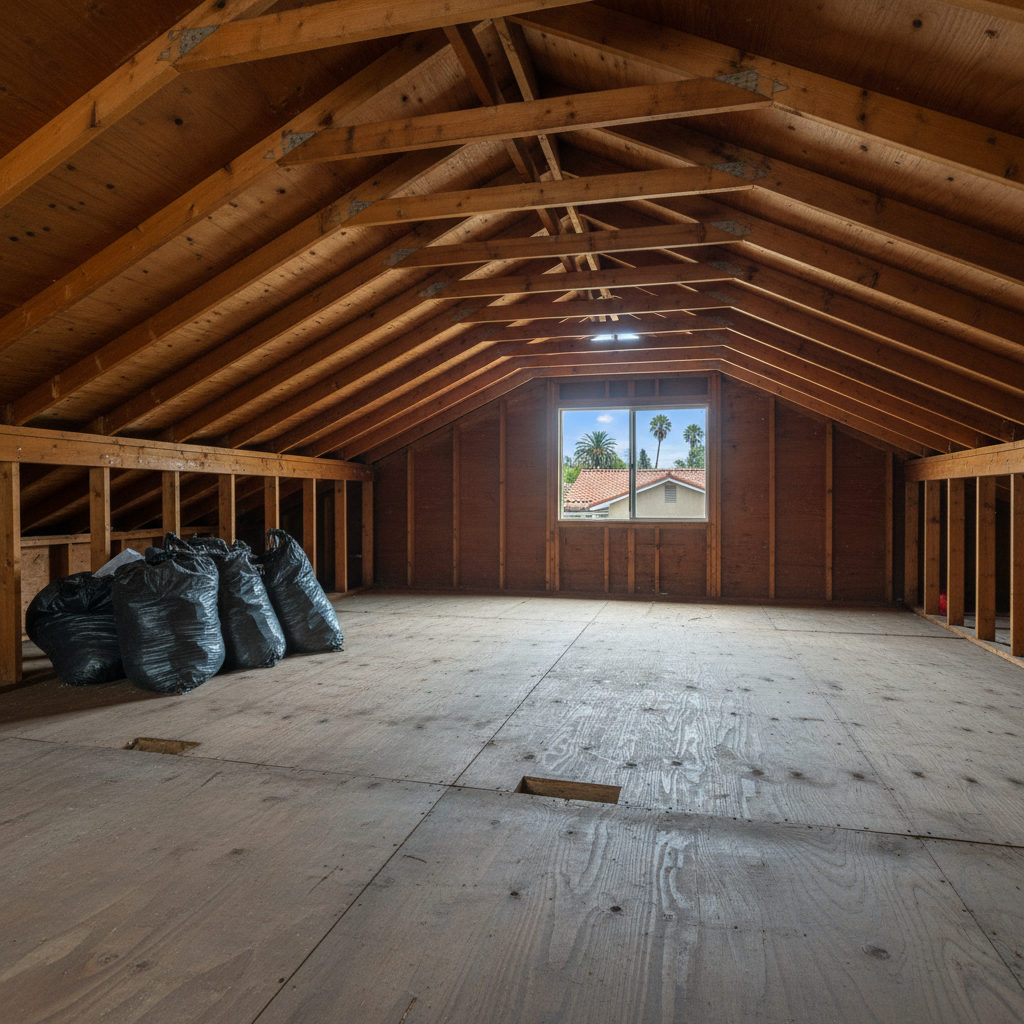
Why You Might Need Insulation Removal
Let's be real, nobody wakes up thinking, "Man, I really want to pay to have insulation taken out today." But sometimes, it's just got to happen. Maybe you've had a rodent problem – and trust me, I've seen some attics in Glendale that look like a rat convention. Or perhaps water damage from a leaky roof or a monsoon storm has turned your insulation into a soggy, moldy mess. Sometimes it's just old, ineffective stuff that's settled and not doing its job anymore, especially if it's that old, dusty cellulose from the 80s that's packed down to nothing.
Whatever the reason, getting that old stuff out is often the first, and most crucial, step before putting in new, efficient insulation. You can't just put good money on top of bad insulation, especially if it's contaminated. That would be a waste, wouldn't it?
What Affects Insulation Removal Pricing?
You want to know what it's gonna cost, right? Well, it's not a one-size-fits-all answer, but I can break down the main things that move the needle on the price tag.
- Type of Insulation: Loose-fill cellulose or fiberglass is generally easier and quicker to vacuum out than dense batts or spray foam. Spray foam, especially if it's closed-cell and really stuck to everything, can be a real bear to remove and takes more labor.
- Amount of Insulation: This one's a no-brainer. More square footage, more depth, more material to remove, more cost. A small attic over a 1,200 sq ft ranch house is way different than a large, two-story home with a massive attic space.
- Contamination Level: This is a big one. If it's just old and dusty, that's one thing. If it's full of rodent droppings, urine, or mold, that requires special handling. We're talking hazmat suits, respirators, and careful bagging to prevent spreading contaminants. This adds significantly to labor and disposal costs.
- Accessibility: Is your attic easy to get into? Can we stand up? Or is it a tight crawl space where we're practically doing gymnastics to get around? The harder it is to access and work in, the longer it takes, and the more it costs. Low-pitch roofs common in some of the older Glendale neighborhoods around Grand Avenue can make access a real pain.
- Disposal Fees: Hauling away contaminated or just plain bulky insulation isn't free. Landfills charge by weight or volume, and those costs get passed on.
- Where the Insulation Is: Attics are common, but sometimes you need insulation removed from crawl spaces, walls, or even vaulted ceilings. Each spot brings its own challenges and can affect the price.
Typical Cost Ranges for Insulation Removal in Glendale
Alright, let's get down to some numbers. Keep in mind these are averages for Glendale, AZ, and can fluctuate based on the factors I just mentioned. These prices typically include labor, equipment use (like powerful insulation vacuums), and disposal.
- Basic Loose-Fill Removal (Fiberglass/Cellulose, uncontaminated): You're generally looking at about $1.50 to $2.50 per square foot of attic space. So for a 1,500 sq ft attic, that could be anywhere from $2,250 to $3,750. This is for relatively easy access and no major contamination.
- Contaminated Loose-Fill Removal (Rodents/Mold): This jumps up significantly due to the specialized equipment and safety protocols. Expect $3.00 to $5.00+ per square foot. That same 1,500 sq ft attic could now be $4,500 to $7,500 or more. This often includes some level of sanitization or deodorizing after removal.
- Batt Insulation Removal: This is often a bit cheaper than loose-fill because it's less dusty and easier to bag. Think $1.00 to $2.00 per square foot.
- Spray Foam Removal: This is usually the most expensive. It often involves scraping, cutting, and sometimes even specialized tools. Depending on the type and how well it's adhered, it can range from $4.00 to $8.00+ per square foot.
- Minimum Charges: For smaller jobs, like a small section of a wall or a very small attic, many companies will have a minimum charge, often in the range of $500 to $1,000, just to cover mobilization and setup costs.
So, for an average 1,800 sq ft home in Glendale with a moderately accessible attic and some minor contamination, you might be looking at a total bill between $4,000 and $7,000 for full removal. It's a significant investment, but often a necessary one.
What Should Be Included in Your Quote?
When you get a quote from Glendale Spray Foam Insulation, or any reputable company, make sure it's detailed. Here's what you should expect to see:
- Total Square Footage: A clear measurement of the area getting service.
- Type of Insulation Being Removed: Specifics matter.
- Method of Removal: Will they vacuum it out, bag it by hand, or scrape it?
- Contamination Handling: If applicable, details on how they'll deal with mold, pests, or biohazards.
- Disposal Fees: These should be itemized or clearly stated as included.
- Cleanup: What kind of cleanup will they do after the job? Will they sweep up any debris that falls into your living space?
- Timeline: An estimated start and completion time.
- Warranty/Guarantee: What if something goes wrong?
How to Avoid Overpaying for Insulation Removal
Nobody wants to get ripped off. Here's my advice:
- Get Multiple Quotes: Don't just go with the first company you call. Get at least three detailed quotes. This helps you compare not just price, but also what's included.
- Be Specific About the Problem: When you call for a quote, describe the situation as accurately as possible. "I have old fiberglass in my attic, about 1,600 sq ft, and I've seen some rat droppings" is better than "I need insulation out."
- Ask About Hidden Fees: Are there extra charges for difficult access? For disposal? For unexpected contamination? Get everything in writing.
- Check References and Reviews: A company's reputation matters. See what other Glendale homeowners say about their work.
- Understand the Scope: Make sure you and the contractor are on the same page about exactly what's being removed and what's being left.
Insulation removal isn't glamorous, but it's often essential for a healthy, energy-efficient home. Do your homework, ask the right questions, and you'll get a fair price for a job well done.