Walking out into a garage in Glendale, AZ in July often feels like opening an oven door. Homeowners who live around Arrowhead Ranch or historic downtown Glendale already know that summer afternoon temperatures turn attached and attached garages alike into absolute bake ovens. Glendale Spray Foam Insulation gets asked about Garage Insulation almost every week by homeowners who are tired of frying tools, cooking cars, or sweating through weekend projects.
Glendale Spray Foam Insulation will go over the questions most often heard on the job site regarding Garage Insulation in Glendale, AZ.
Will insulating my garage actually lower my house's energy bills?
Yes, but it depends on how your garage is attached. If you share a common wall or a ceiling with living space, such as a bonus room or bedroom, insulating the garage walls and door makes a huge difference. That heat trapped in the garage loves to migrate right through shared drywall into your living areas, forcing your air conditioning unit to work overtime. If your garage is completely detached, Garage Insulation will not drop your indoor electric bill directly, but it will save you from a lot of misery if you use the space for anything other than parking.
How much temperature drop can I realistically expect in the summer?
Homeowners must manage expectations here. We are not talking about air-conditioning levels unless you actually install a mini-split system. But if you seal up the space and use quality spray foam or rigid foam boards for Garage Insulation, you can typically expect your garage to stay 15 to 20 degrees cooler than the outside peak. That takes it from a brutal 120 degrees down to something much more manageable, especially once the sun goes down.
Can I just use fiberglass batts, or do I need spray foam?
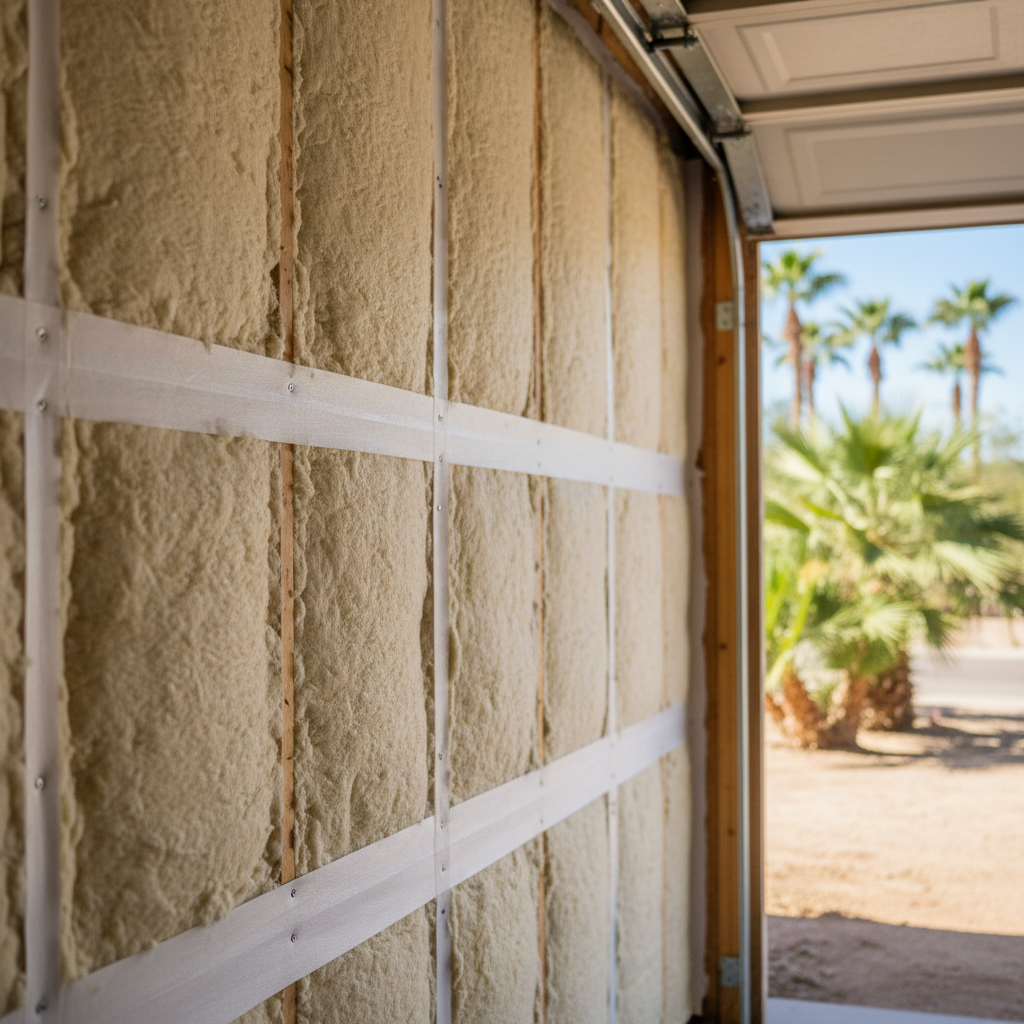
You can use batts, but you need to know what you are getting into. Traditional fiberglass fits between standard wood studs just fine, but Glendale's intense heat cycles and dry desert air can cause issues if it is not installed tightly with a proper vapor retarder. Open-cell or closed-cell spray foam seals every tiny crack and gap, stopping radiant heat transfer dead in its tracks. Glendale Spray Foam Insulation usually recommends spray foam or rigid foam boards for Garage Insulation because they handle our extreme climate shifts much better than fluffy batts that tend to sag over time.
Do I need to insulate the garage door too?
The garage door is the largest uninsulated surface on your house, acting like a giant radiator baking your belongings all afternoon. If you insulate the walls and ceiling but leave a thin metal or wood door bare, you are missing half the battle. You can add a kit or swap it out for an insulated model, and you will notice the change immediately.
Will insulating cause moisture or ventilation problems?
Not if it is done right. Some people worry that sealing up a garage traps humidity, but out here in Glendale, our biggest enemy is dry heat, not dampness. However, you still need proper air exchange, especially if you store chemicals, run a gas water heater, or park a hot car inside. Glendale Spray Foam Insulation always looks at the whole space to make sure it breathes properly without letting the brutal heat take over.
For homes and businesses in Glendale, Glendale Spray Foam Insulation provides Garage Insulation services.