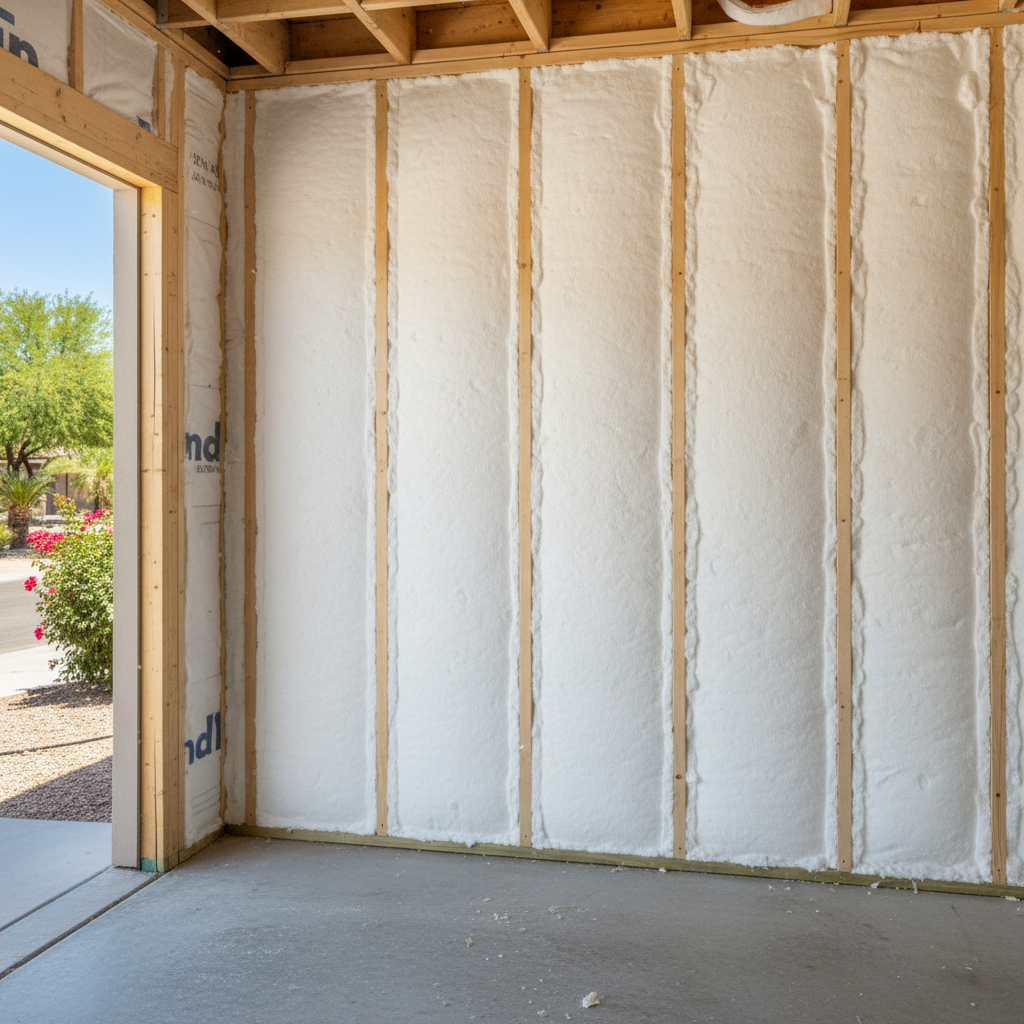
Why Bother Insulating Your Garage in Glendale?
Look, I get it. Your garage isn't usually the first place you think about insulating. But here in Glendale, with our summers that feel like a blast furnace and even those surprisingly chilly winter mornings, it makes a huge difference. It's not just about making it comfortable enough to work on a project out there, though that's a big part of it. Insulating your garage helps keep your whole house cooler by stopping all that heat from bleeding in through shared walls and ceilings. It protects anything you store out there – paint, chemicals, even your car battery – from extreme temps. Plus, if you've got a room above the garage, insulating below it is a no-brainer for comfort upstairs.
What's the Deal with Insulating Garage Doors?
This is a big one, and people often miss it. Your garage door is basically a giant uninsulated wall, sometimes facing west, soaking up all that afternoon sun. Even if you insulate the walls and ceiling, if that door is bare metal, you're still losing a ton of heat. You can buy insulation kits for existing doors, or if you're replacing your door, definitely opt for an insulated model. It's not just about R-value either; a good insulated door also seals better, keeping out dust and critters, which is a bonus for us here in the Valley.
Do I Need a Vapor Barrier in My Garage?
For most garages in Glendale, especially those that aren't conditioned space (meaning you're not actively heating or cooling them like your house), a vapor barrier isn't typically critical for wall insulation. Our climate is dry, after all. The bigger concern is heat transfer, not moisture getting trapped in the wall cavity. However, if you're converting your garage into a living space, or if you're insulating a wall that's below grade, then yes, you'll want to consider one. But for a standard attached or detached garage, focus on R-value and air sealing first. If you're using spray foam, it acts as its own air and vapor barrier, which simplifies things quite a bit.
Can I Insulate My Garage Ceiling if There's a Room Above It?
Absolutely, and you should! This is one of the most impactful things you can do for comfort in that room above. Think about it: all that heat rising from the garage, or the cold radiating up during winter. Insulating that ceiling creates a thermal break. We usually recommend closed-cell spray foam for this application because it offers a high R-value in a compact space and really seals up all those little gaps around joists and wires. It'll make a noticeable difference in the temperature stability and energy bills for that upstairs room.
What's the Best Insulation for Garage Walls?
For walls, you've got a few options. Fiberglass batts are common and budget-friendly, but you need to make sure they're installed perfectly, no gaps or compression. Blown-in fiberglass or cellulose can work too, especially if you're retrofitting existing walls. But if you're looking for the best performance, especially with our Glendale heat, spray foam is king. Both open-cell and closed-cell spray foam offer superior air sealing and R-value. Open-cell is usually more economical and great for sound dampening, while closed-cell gives you a higher R-value per inch and adds structural rigidity. It really depends on your budget and how much you want to transform that garage.
How Does Insulating My Garage Affect My HVAC System?
This is a smart question. If your garage is attached to your house, insulating it can actually reduce the load on your home's HVAC system. When your garage gets super hot, that heat radiates into the adjacent living spaces, making your AC work harder. By insulating the garage walls and ceiling that connect to your home, you're essentially creating a buffer zone. It's like putting on an extra layer of clothing – it helps maintain a more stable temperature inside your house, meaning your AC won't cycle as often, saving you money on those brutal summer electric bills. It's a subtle but significant benefit.
Should I Insulate a Detached Garage?
Even a detached garage can benefit from insulation, especially if you use it as a workshop, for storage of temperature-sensitive items, or if you plan to spend any significant time out there. The principles are the same: insulate the walls, ceiling, and consider the door. If you're not heating or cooling it, insulation will still keep it cooler in summer and warmer in winter than an uninsulated structure. It's about moderating those extreme temperatures. For a detached garage, especially if it's got a concrete slab, you might even consider insulating the slab edges to prevent heat transfer there. Here at Glendale Spray Foam Insulation, we've helped plenty of folks make their detached workshops usable year-round.